Discover expert tips on SEO, business, fashion, lifestyle, automotive, home improvement, and online earning strategies to grow your digital knowledge and success.

Showing posts with label dangerous goods container. Show all posts

Tuesday, January 21, 2020

What are Some Must-Have Features in a Dangerous Goods Container?

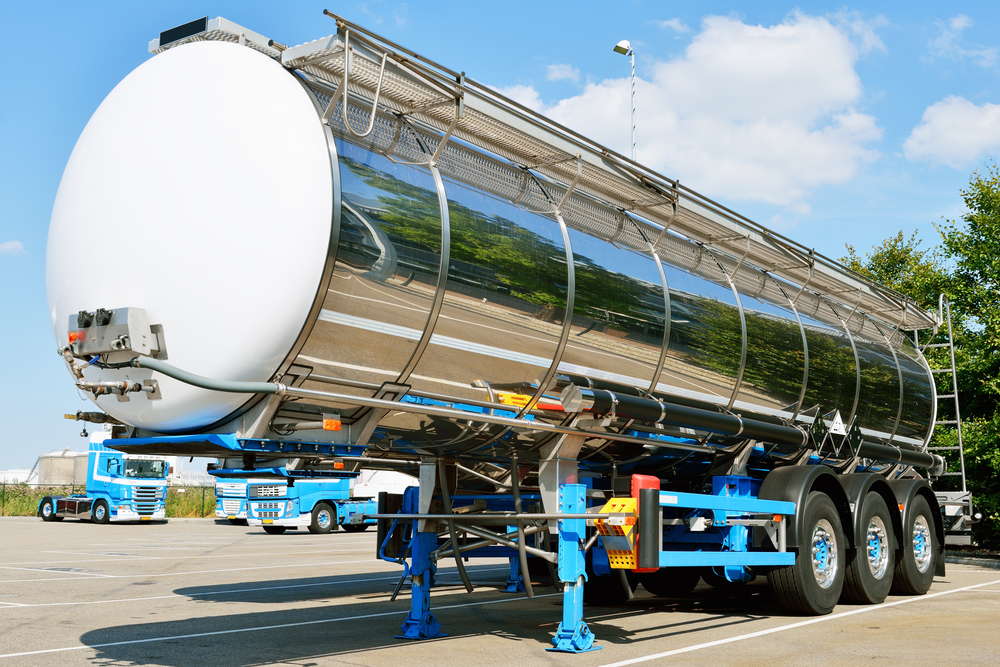
Dangerous Goods Container, also referred to as Hazardous Goods Container, is a common term used in the shipping industry. It is a type of container that is specially manufactured in Australia for shipping goods of a hazardous nature. These containers are used to bring goods into Australia or to ship them across the globe or relocate them interstate with an assurance of compliance to the legal specifications of Australia. Know about some of the features that this type of container must-have.
dangerous goods container
Dangerous Goods Container

Spill Containment

During the storage of hazardous goods, the dangerous goods container should be able to contain all types of spills that can possibly happen. Even in case there is spillage of such items inside the container, there could be risks for people, organization or even the environment. The spill containment capacity needed for hazardous goods varies from every dangerous goods class.
  • AS3780 – Australian standard outlining spill containment capacity for any stored corrosive substance.
  • AS1940 – Australian standard outlining spill containment capacity for any flammable liquid.

Dangerous Goods Signage

This requirement is mandatory for dangerous goods container that stores hazardous goods. Goods storage facilities have to display proper signage. Workers can benefit from the safety signage and detect the classes of hazardous goods that are being stored. There is a different signage requirement for each class of hazardous goods, and failure to display that means non-compliance with the Australian standards. This will put workers at severe risk.

Ventilation

Some classes of hazardous goods include:
  • Oxidizing agents
  • Organic peroxides
  • Corrosive substances
  • Toxic substances
  • Flammable liquids
These emit dangerous vapours that can have a major impact on the health of humans. You can get intoxicated from these goods through:
  • Inhalation
  • Skin contact
  • Ingestion
dangerous goods container
Dangerous Goods Containers
Inhalation is the commonest type of exposure among all three. The risks of exposure to dangerous gases and vapours from these goods can be reduced by manufacturing a dangerous goods container with all the ventilation specifications that are mentioned in the relevant standard of Australia for the hazardous goods class being stored. A hazardous goods container not having ventilation will not be compliant with proper Australian standards. It can have a high dangerous vapours concentration which may increase asphyxiation risks if inhaled.

Operational Safety Features

There are a number of other mandatory safety features that these containers must acquire.
  • Internal opening – Every door of such a container should be capable of being opened from the inside. Exterior locks, if any, have to be deactivated. It will also make sure that nobody is trapped within the container. In case a worker gets trapped within such a facility, he or she can possibly die due to the asphyxiation.
  • The passage in the container – It should have a passage measuring a minimum width of 800mm, which can extend from the container’s one end to another.
  • Intrinsically safe electrical equipment – There should not be any electrical equipment fitted to a dangerous goods container that is used to store combustible or flammable liquid. In case the container needs some electrical equipment, it has to be safe intrinsically. In case electrical equipment that is non-intrinsically safe is used within a flammable storage container, it is likely to serve as a source of ignition and could lead to a major fire hazard easily.

Protection Against Toxic Chemicals

Hazardous goods can create a danger to the environment, property and people but such goods are also needed for the manufacturing of various products. These goods can be flammable liquids, corrosive substances, chemicals,  or more. It is essential to carry them from one place to another safely else they can create major accidents. That is why we need dangerous goods containers.

Thursday, February 2, 2017

Tip On Choosing A Company For Transport Of Dangerous Goods

When it comes to the transport of dangerous goods, the most important thing that you need is a reliable moving company. There are a large number of moving companies available and in the increasing array of such choices you need to be very careful before choosing one of them. Since the change or the shift will happen in one shot you will not get much option later to make any changes. Here are some factors to consider: 

Dangerous goods container

Rules And Regulations

Different countries and states have different sets of rules and regulations. So the transport of dangerous goods is much different from general stuff. There are some moving companies that generally do partial shifting like moving only the furniture, or there are some that don’t do inters state moving. Some of the moving companies don’t do the arrangement work and you may need to hire special or professional help in that regard. The important aspect is to check if the company you hire complies with these norms. So check for:

  • If the goods being transported would be allowed in the country you are sending it from
  • Are they permissible in the country or the state you are sending it to?
  • Is the hired company experienced in the transportation of dangerous goods?
  • What are the kinds of charges they take for the same?
  • What is the insurance aspect for transport of dangerous goods? Most countries make it mandatory that in case of damage, the costs are borne by the sender, which means added expenses and risks for you. 

Hazardous goods transport
For example, The Carriage of Dangerous Goods and Use of Transportable Pressure Equipment Regulations (CDG) and the European agreement make it mandatory for the ADR to regulate the carriage of dangerous goods by road. 

If you are choosing a moving company for the transport of dangerous goods that does the full service, from carrying your goods, after packing them properly, and they un-wrapping them in the target site, you are actually hiring a full service moving company. More details about such service moving companies are available online with customer feedback and client reviews. You can go through them since there are some legal matters and tricky parts for which you will need help. You should always read their documents carefully and not sign their contractual agreement unless you have gone through each and every part of the document. 

For parts which you don’t understand, you should take some legal help and hire a lawyer in such cases, especially when it comes to transport of dangerous goods. Search online for full service moving companies and the way they charge. Most clients who have gone through any such bad experience will have mentioned the same in their blogs or somewhere. Most moving companies charge on the basis of weight. But some moving companies charge on the basis of volume. This is where things could be tricky as they may use a huge truck and charge you for the whole volume of the truck but your load may be less than that.  Also, dangerous goods may be put as high risk and thus charges are higher. 


Transporting hazardous goods
When going by weight you should keep a tab of the weight tickets that they get for transport of dangerous goods. Since sometime the moving companies also charge the weight of the truck all-together and you need to be careful in such cases. Don’t sign the form until after you have checked all the goods, since once you have signed it there will be no legal liability of the moving company towards you. And do make sure that the packaging is right to prevent the risks of damage and harm to others, especially with chemicals and other dangerous goods.

Thursday, October 6, 2016

Transport Of Dangerous Goods While On Road

Transportation is a complicated and distinct line of work, especially if you are in the business of transporting dangerous goods, thing that cannot either be exposed to the atmosphere, due to their chemical properties or have been prohibited by law to be to be transported with regular goods. In other words, we can say, that there is a complete code of conduct in place, for transporting dangerous goods, be it via road or rail or any other mode that you can think of.

Transporting hazardous goods
The state authorities are directly responsible for implementing the laws regarding the transport of dangerous goods. In fact, the national transport commission is responsible for maintaining the codes, for any transport through road or rail, for a substance that falls in the dangerous goods category. 

The question that comes to mind is: why do we need separate sets of law for transport of dangerous goods?

The answer is quite simple. It is a great risk to transport heavy vehicles laden with dangerous goods, on the same roads as the regular vehicle uses. Accidents on roadsides that too involving a heavy vehicle, are not unheard of. Just imagine, what will happen if a truck loaded with an inflammable substance breaks down in the middle of the road, while there are fast moving vehicles right behind it. Well, we all know what could be the outcome of such a dangerous scenario. 

These kind of dangerous are the main reasons, why there are international convection and laws for the transportation of such goods.

Dangerous goods container
{Read Also: Safe and Secure Dangerous Goods Transportation by Regulatory Compliance}

The next question, which comes to mind, is about the goods. What is considered goods are considered to be dangerous to transport? 

To answer this question we compiled a small list of item that comes under the transport of dangerous goods.

  1. Most combustible gases falls under this category, it also include gases that can be harmful or dangerous to breath in by us or the animals.
  1. Flammable liquids are the next item on the list, and obviously too. Just like combustible gases, they can be dangerous for a number of reasons.
  1. The move to the solid state of the flammable substances. In fact, this category includes, not only the flammable substance, but also the self-reactive and desensitized solid substances, that can result in an explosions.
  1. A lot of solids and gases or even liquids are stable in their natural form, however quite reactive when mixed or exposed to liquids, as simple as water. Since, the chances of that happening on road are quite high. These kind of substances has also been included in the list.
  1. Oxidizing agents or substances. Now, this is a purely chemical property of a substance and quite difficult to explain in chemical terms. However, in simple words, we can say that any substance that reacts with oxygen in certain way should fall under this category.
  1. Next is quite important, the toxic substance. Though, most of us will have a question in mind, that why would anyone want to transport a good as dangerous as a toxic. What we need to consider in this case is the form of the substance. Like most pesticides and even bug repellent sprays contain a degree of toxic it them. However, before this toxic is mixed with them, it is found in concentrated state, and may need to be transported from one place to other.
Dangerous goods transport companies
These are some of the classification of the goods that should fall under the transport of dangerous goods. Though, there are a lot or other regulations that needs to be followed before a truck can be loaded with a dangerous good and be allowed on the road. If you want to know more about dangerous goods transportation then go through this link to get into detail.


Sunday, August 7, 2016

Tips to Go for Dangerous Goods Transport for Industry

Transportation of goods are based on risks and so there are lot of safety standards, and regulations that are in place to avoid the accidents with dangerous goods transport. There is a legislative framework to transport the goods by road or by rail for industry. The framework is combined with the international standards for the safe transport and the storage of goods that are dangerous. The dangerous goods transport requires permission for land transport and provides important controls for the movement of commonly used goods that are dangerous.

Transporting hazardous goods

Documentation Standards are Essential for Transfer of Goods 

At times there are goods that may endanger the safety of the aircraft or the passengers on-board. Therefore, the transportation of these dangerous materials are either restricted of forbidden and primarily the safety of people is considered. The high degree of safety of the transportation of dangerous good by air is defined by standards for documentation, the training and handling and the promotion and use as well. It is ensured that the guidelines and the rules of transportation of dangerous goods and transport are very efficient and effective. 

Any incentive to bypass the regulations need not be removed and it should be easy to ship the dangerous materials like any other product. The transport of these goods must be regulated to prevent the accidents to any person or property or anything which cause damage to the environment. There are different regulations in different countries regarding the dangerous material transport. There are also various modes of transportation for the international trading of chemicals and other dangerous products. 

The goods are dangerous are subjected to various kinds of regulations like the work safety regulations, environment protection regulations, storage regulation, customer protection regulations, etc. To maintain the consistency between the regulatory systems, there are lots of mechanisms that are developed for hazard communication tools and hazard classification criteria and the transport conditions for all the modes for transport. The agreements ensure that the effective implementation of all the mechanisms as well as the transport for all the dangerous goods by rail, road and by the inland waterways. 

Dangerous goods transport companies

Agreements for International Transportation of Goods

While carrying those goods by rail or road, there is always a risk of traffic accidents. If the goods are dangerous, there is a risk of spillage, which might lead to hazards like fire, explosion, environmental damage or chemical burn. The transportation of these goods internationally by land is governed by the agreements drawn up by the international bodies and are regularly updated with the technical progress to keep pace and improve safety. 

The agreement lays down several points to be checked and after completing the checking, it requires a report on the checking for the authorities to make any further proceedings. The kind of vehicles are also mentioned which can carry the goods that are dangerous. The vehicles incorporate all the technical requirements from the transport agreement. You can choose trucks and equipment needed transport hazardous materials.

Dangerous goods container

Labeling Helps in Easy Identification

The packages containing the goods are labeled to identify the hazardous property, which warns everyone while handling in an emergency. The person involved in transportation of goods needs to comply with all the rules and also all the responsibilities allocated for each. If you are carrying in smaller quantities for agricultural use or commercial purpose, then you must properly pack and identify the goods as dangerous which ensures safe handling practice. It is important to follow the above mentioned points if you want to protect the people and also the environment safety. If you are careful in this regard then it is possible to transport even the dangerous goods with ease.

Connect

Follow

Blog Archive

Popular Posts

Follow On Twitter

Recent Comments